
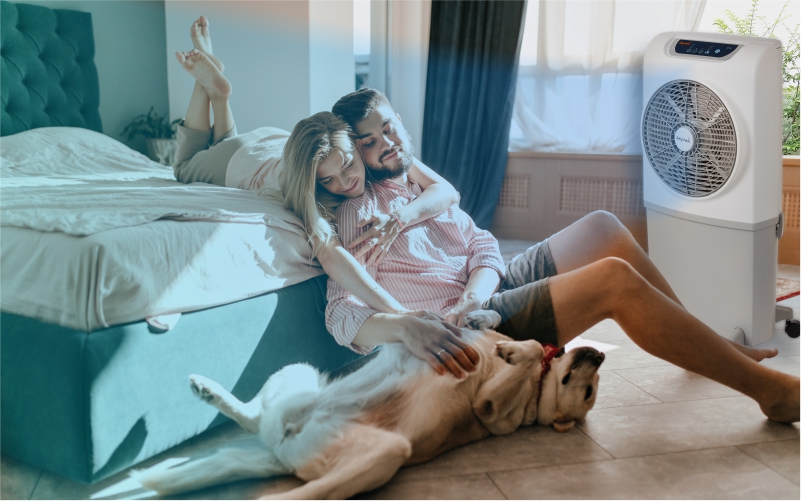
Hot weather can make staying comfortable difficult, even inside your home. If you're looking for an alternative to traditional air conditioning, an evaporative air cooler may be worth considering.
Evaporative air coolers provide a simple and energy-efficient way to cool the air, particularly in hot, dry climates. In this guide, we'll explain how evaporative cooling works and what to consider when choosing the right evaporative air cooler for your home or business.
What Is an Evaporative Air Cooler and How Does It Work?
First, let's look at what an evaporative air cooler is. An evaporative air cooler is a cooling system that uses water to reduce the temperature of incoming warm air. As water naturally evaporates, it absorbs heat from the air, creating a cooling effect.
Evaporative air coolers do not require refrigerants or compressors to provide cooling. They generally perform best when temperatures are high and humidity levels are low.
The process works much like a waterfall. Water from the tank circulates through and saturates the internal cooling pads. Warm air is drawn through these wet pads, where evaporation removes heat from the air. A fan then distributes the cooler air into the surrounding space.
What Is the Difference Between an Evaporative Air Cooler and an Air Conditioner?
Now that you know how an evaporative air cooler works, you may be wondering how it differs from a traditional air conditioner. Because evaporative coolers can look similar to portable air conditioners, the two are sometimes confused. However, there are several important differences.
Traditional air conditioners use refrigerants and a refrigeration cycle to remove heat and moisture from indoor air. They are designed to cool enclosed spaces and provide more precise temperature control.
Evaporative air coolers use water evaporation to cool incoming warm air. Because this process adds moisture to the air, they are generally best suited for hot, dry climates and open or well-ventilated spaces.
Another difference is installation. Many air conditioning systems require professional or permanent installation, while portable evaporative air coolers generally require only water, electricity, and proper ventilation.
What to Consider When Choosing an Evaporative Air Cooler
Now that you understand the basic differences between air conditioners and evaporative air coolers, the next step is choosing the right cooler for your needs.
Evaporative air coolers are available in a variety of sizes and models, with different features designed for specific applications. Here are some of the most important factors to consider when choosing an evaporative air cooler for your home or business.
Cooling Area
One of the first things to consider is the size of the area you want to cool. Homes, apartments, businesses, and outdoor spaces vary significantly in size, so the same evaporative cooler will not be appropriate for every application.
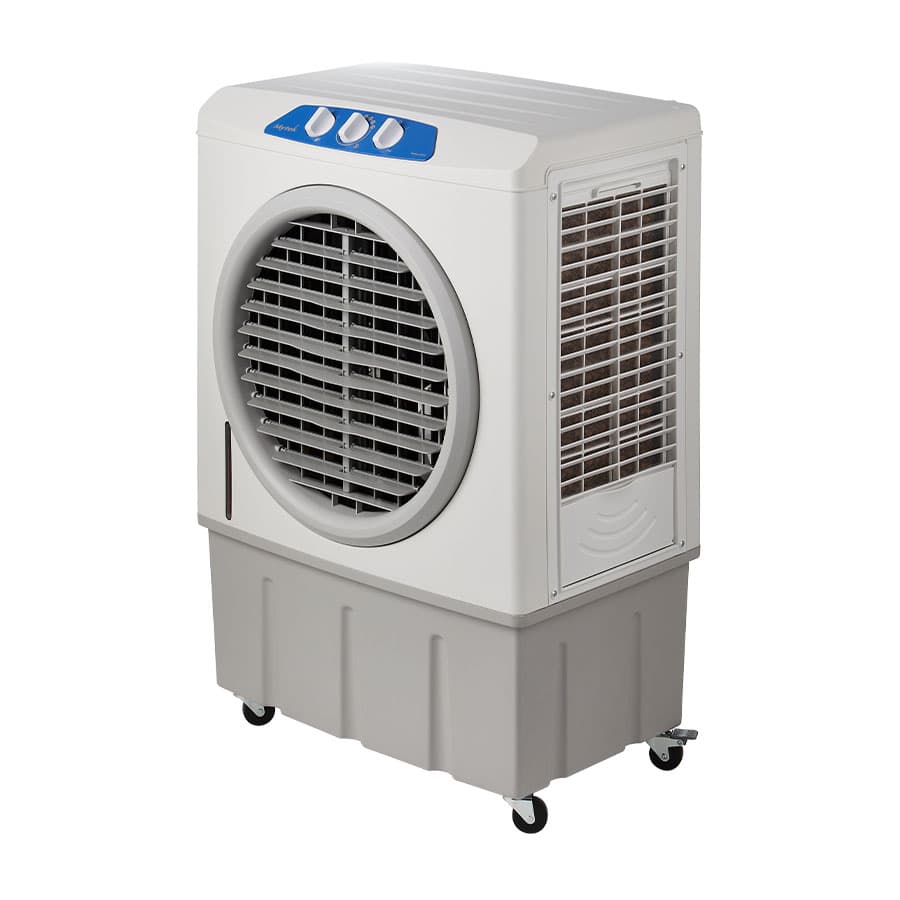
Generally, greater airflow allows a cooler to serve a larger area. For example, Mytek's 60-liter evaporative air cooler provides 1,535 CFM of airflow and has a recommended cooling area of 66–99 m².
Before selecting a cooler, measure the area where you plan to use it and compare that space with the manufacturer's recommended cooling area and airflow specifications.
Energy Consumption
Energy consumption is another important factor when choosing an evaporative air cooler.
Evaporative coolers generally consume less electricity than traditional compressor-based air conditioning systems because they primarily rely on a fan and water pump to provide cooling.
Energy consumption can vary between models, so compare the wattage and specifications of different units before making your decision. Choosing an appropriately sized unit can help provide effective cooling without unnecessary energy use.
Airflow Settings and Direction
Although evaporative air coolers all use the same basic cooling process, additional features can make them more convenient and comfortable to use.
Some models have fixed vents with limited control over the direction of the airflow. Other models allow you to adjust the fan speed and airflow direction.
If you want greater control, look for features such as multiple fan speeds, adjustable louvers, and oscillation.
Water Tank Capacity and Continuous Water Supply
Water supply is another feature to consider when comparing evaporative air coolers.
Some models require the water tank to be filled manually. Depending on the size of the tank and how frequently the cooler is used, this may require regular refilling.
Larger or more advanced models may include a continuous water supply connection. This allows a hose to be connected directly to the unit so the tank can maintain an appropriate water level during operation.
For frequent or extended use, a continuous water supply can make operating the cooler much more convenient.
Remote Control
A remote control is another convenient feature to consider when choosing an evaporative air cooler for your home or business.
Without a remote, you need to access the unit directly whenever you want to adjust the fan speed, airflow settings, or power.
A model with a remote control allows you to make compatible adjustments from a distance, making everyday operation easier and more convenient.
Timer Function
A timer can also make an evaporative air cooler more convenient to use.
With a timer function, you can set the cooler to operate for a specific amount of time and automatically turn off afterward.
This can be especially useful when using the cooler in the evening or whenever you only need cooling for a certain period. It can also help avoid unnecessary energy use by preventing the unit from running longer than needed.
Easy Storage and Portability
Size and portability are especially important when choosing an evaporative air cooler for your home.
Although evaporative coolers require enough space for their water tanks, cooling pads, and fans, a well-designed unit can still be easy to store and move.
Consider the dimensions and weight of the cooler before purchasing. Narrower designs may fit more easily between furniture or in storage areas, while caster wheels make it easier to move the cooler from one area to another.
Choosing the Right Evaporative Air Cooler
We've covered how evaporative air coolers work, how they differ from traditional air conditioners, and some of the most important features to consider when selecting a model.
Every home and business has different cooling needs, so the right model depends on factors such as the size of your space, airflow requirements, water capacity, portability, and desired features.
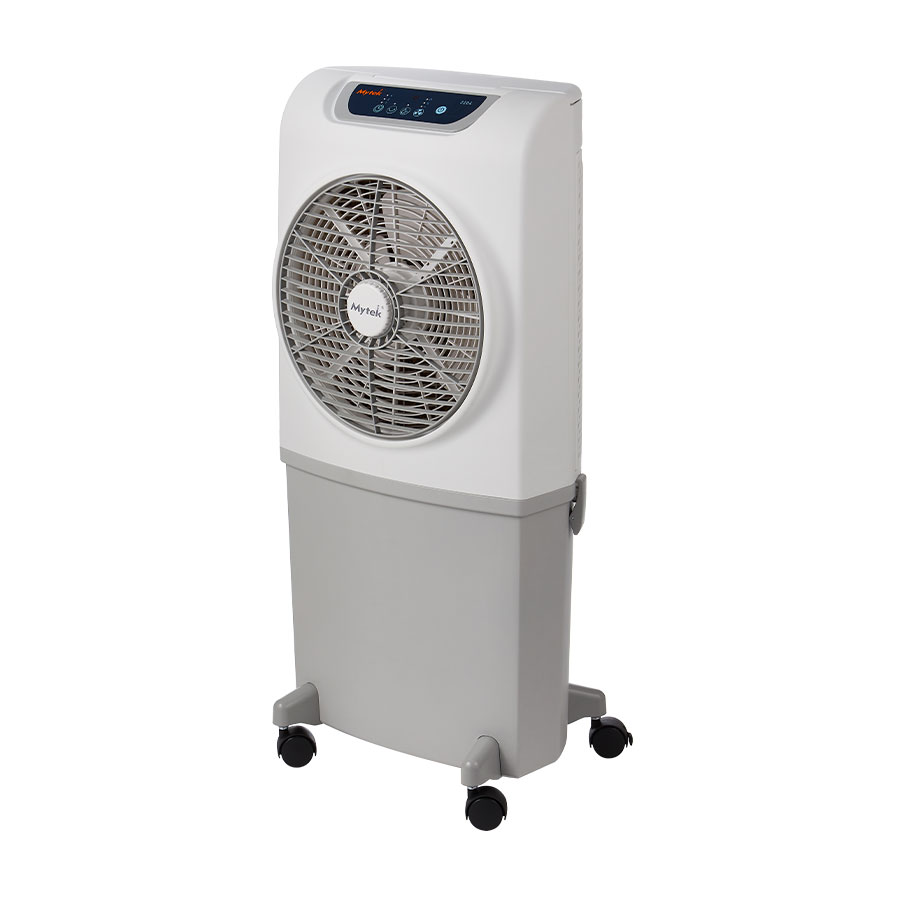
The Mytek 3204 Evaporative Air Cooler features a 45-liter water tank and is designed for smaller to medium-sized areas. Its triangular design makes it easier to position and store in smaller spaces, while an LED display and remote control provide convenient operation.
Mytek also offers larger models for spaces that require greater airflow and water capacity.
Mytek Evaporative Air Cooler Comparison
| Specification | Model 3204 | Model 3399 | Model 3400 | Model 3401 |
|---|---|---|---|---|
| Image |
|
|
|
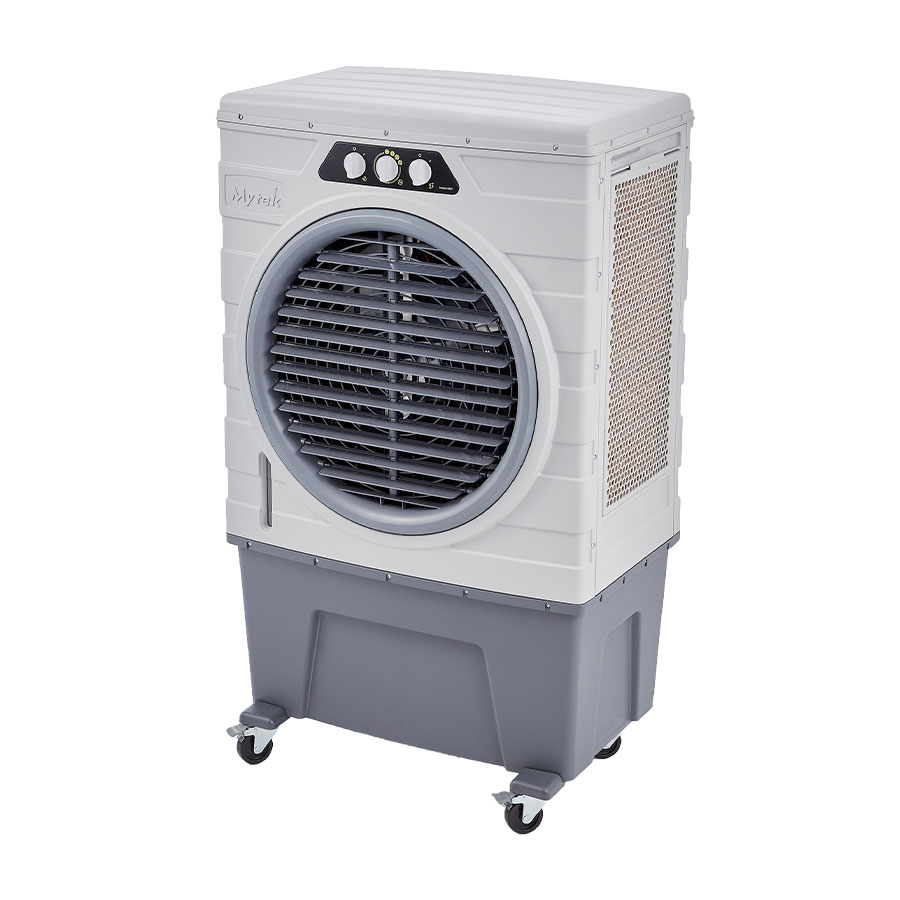
|
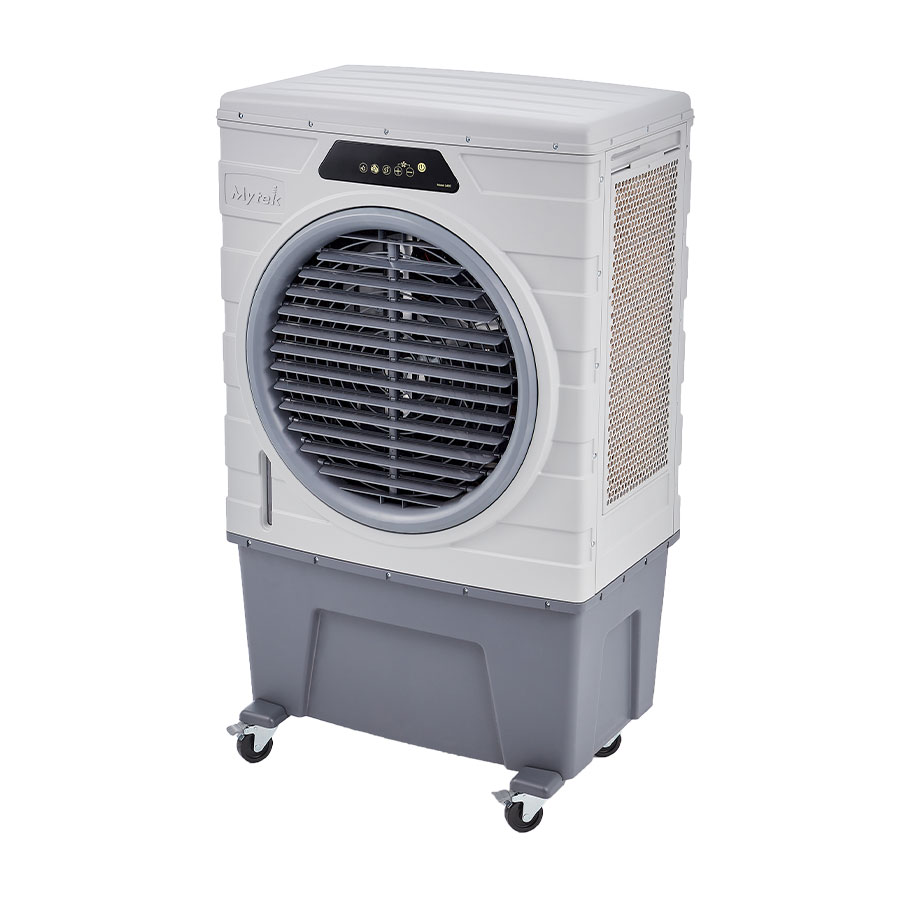
| Airflow (CFM) | 650 | 1,535 | 2,102 | 2,102 |
| Water Capacity (L) | 45 | 60 | 100 | 100 |
| Cooling Area (m²) | 33–66 | 66–99 | Up to 99 | Up to 99 |
| Dimensions (mm) | 490 × 450 × 1060 | 690 × 460 × 1025 | 818 × 530 × 1387 | 818 × 530 × 1387 |
| Weight (kg) | 16 | 24 | 35.3 | 35.8 |
| Power (W) | 80 | 210 | 200 | 250 |
Swipe horizontally to compare all models.