Hot days can quickly become uncomfortable and exhausting. Fortunately, there are several ways to help keep your space cool, including portable air coolers.
Portable evaporative air coolers offer an efficient and convenient way to cool the air without the installation requirements of traditional air conditioning. In this guide, we’ll explain how portable air coolers work, their benefits, what to consider when choosing one, and some of the portable evaporative air coolers available from Mytek.
If you’re looking for an effective way to beat the heat, here’s what you should know.
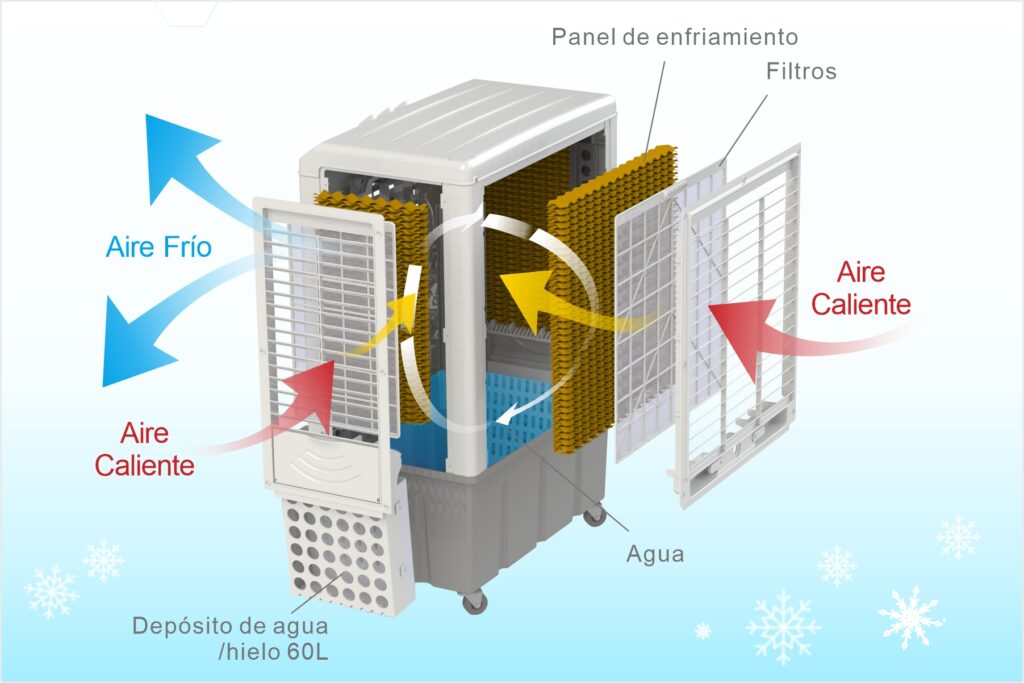
Table of Contents
ToggleWhat Is a Portable Air Cooler?
A portable air cooler is a device designed to cool the surrounding air through the process of evaporative cooling.
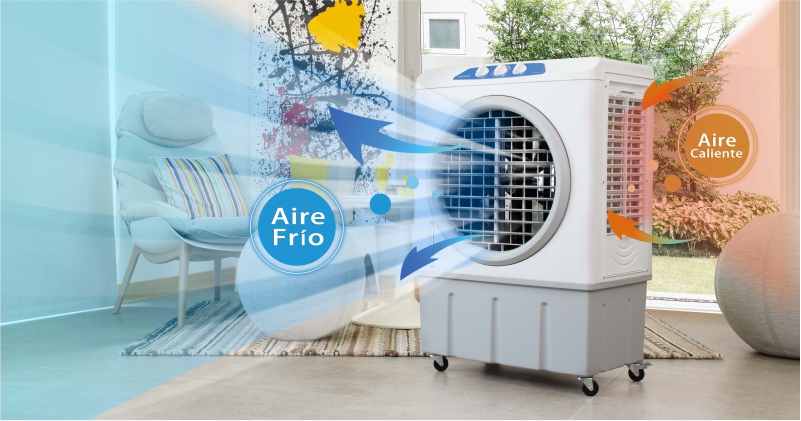
Unlike conventional air conditioners that use refrigerants and a refrigeration cycle, evaporative air coolers use water evaporation to reduce the temperature of incoming warm air.
These units typically include a fan, water tank, cooling pads, and filtration system. The fan draws warm air through water-saturated cooling media. As the water evaporates, it absorbs heat from the air, producing a cooler breeze.
Because evaporative cooling adds moisture to the air, portable evaporative air coolers generally perform best in hot, dry climates and open or well-ventilated spaces.
You May Also Be Interested In:
How Does a Portable Air Cooler Work?
To understand how portable air coolers work, it helps to understand the basic process of evaporative cooling.
The Evaporative Cooling Process
Evaporative cooling is a natural process in which water absorbs heat as it evaporates.
Portable air coolers use this principle by drawing warm air through wet cooling media, such as water-saturated cooling pads. As the air passes through the pads, some of the water evaporates and absorbs heat from the incoming air.
The cooler air is then pushed back into the surrounding space by the unit’s fan, creating a continuous flow of fresh air.
For best results, evaporative air coolers should have access to fresh airflow and adequate ventilation.
Advantages of Portable Air Coolers
Portable evaporative air coolers offer several advantages compared with traditional cooling systems.
Energy Efficiency and Cost Savings
Portable evaporative air coolers generally consume less electricity than traditional air conditioning systems because they do not rely on compressors and refrigeration cycles.
Lower energy consumption can help reduce operating costs, particularly when cooling open or well-ventilated areas where traditional air conditioning may not be practical.
Portability and Versatility
One of the biggest advantages of a portable air cooler is flexibility.
Many models include caster wheels, allowing the cooler to be moved between different areas as needed. Depending on the model and environment, they can be used in homes, garages, workshops, patios, restaurants, warehouses, event spaces, and other indoor or outdoor areas with adequate ventilation.
Cooling Capacity
Portable air coolers are available in different sizes and airflow capacities.
Choosing the right model depends on several factors, including the size of the area, airflow requirements, temperature, and humidity.
For the best performance, choose a cooler designed for the size and conditions of the space where it will be used.
Added Humidity in Dry Environments
Because evaporative cooling adds moisture to the air, it can help reduce excessive dryness in hot, arid environments.
This makes evaporative cooling particularly well suited for areas with low relative humidity.
You May Also Be Interested In:
Evaporative Air Cooler vs. Air Conditioner: What’s the Difference?
Factors to Consider When Choosing a Portable Air Cooler
When looking for the right portable air cooler, there are several important factors to consider.
Size and Cooling Capacity
Check the dimensions of the cooler to make sure it fits comfortably in your available space.
You should also consider the unit’s airflow and recommended cooling area. Selecting a model with the appropriate capacity for your space will help you get the best possible performance.
Features and Controls
Some portable air coolers include additional features such as:
- Adjustable fan speeds
- Programmable timers
- Automatic oscillation
- Remote controls
- Water-level indicators
- Multiple airflow settings
Consider which features are most useful for your application when comparing models.
Energy Consumption and Efficiency
Review the power consumption of the unit before making your selection.
Portable evaporative coolers typically require significantly less electricity than compressor-based air conditioning systems, but energy consumption can still vary depending on the size and power of the unit.
Noise Level and Design
Consider where the cooler will be used and whether noise levels are important for the space.
Design and dimensions can also be important, particularly when the unit will be used in customer-facing areas such as restaurants, hospitality spaces, offices, or event venues.
Price and Overall Value
Set a budget and compare models based on their features, airflow, cooling capacity, construction, and intended application.
The most expensive model isn’t necessarily the best choice. The goal is to find the right balance of performance, features, and capacity for your space.
Mytek Portable Evaporative Air Coolers
Mytek offers portable evaporative air coolers designed for different spaces and cooling requirements.
Here are several models to consider.
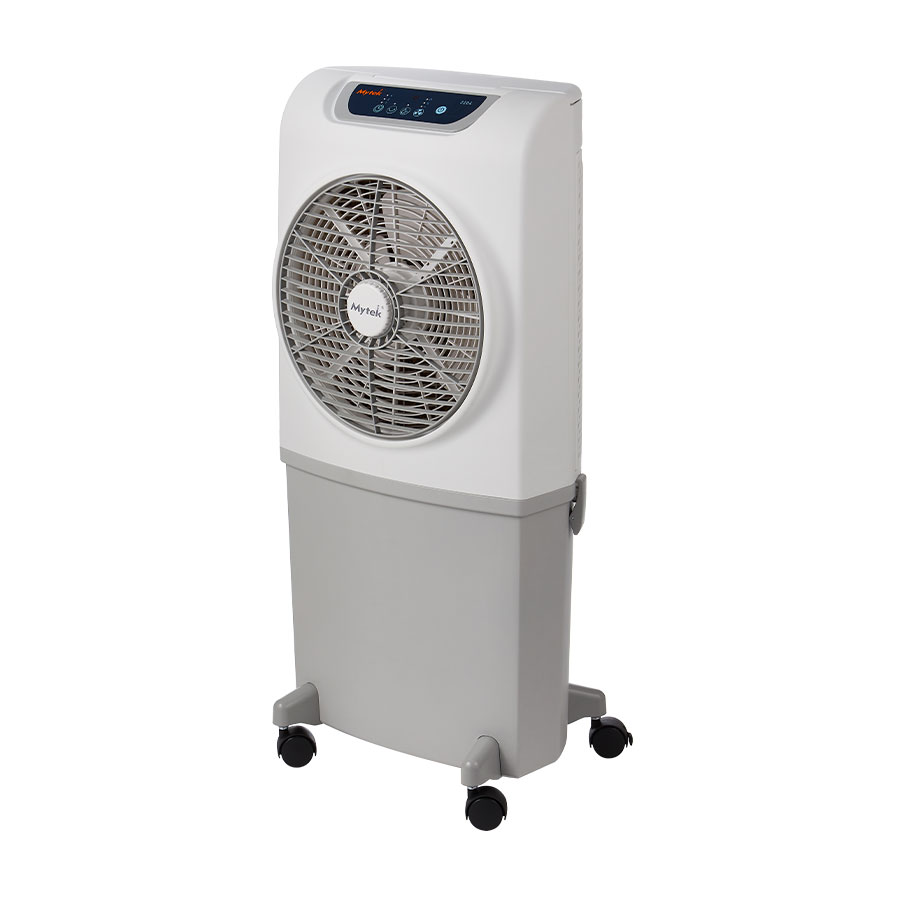
Model 3204 – 45L Portable Air Cooler
The Mytek 3204 Portable Air Cooler features a space-saving triangular design and a 45-liter water tank.
Safety buckles make it easier to separate the tank for cleaning, while a top compartment provides convenient access for adding water and ice.
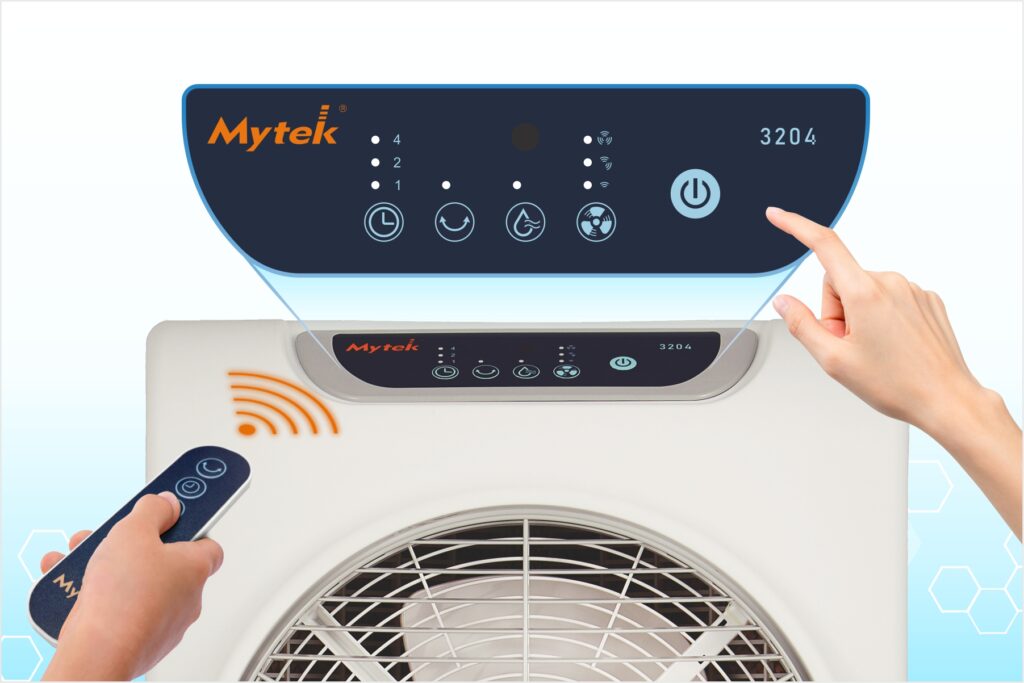
The unit also features a digital control panel and low-water alarm.
Four caster wheels make the cooler easy to move. The rear wheels include brakes to help keep the unit securely in place when needed.
A remote control provides additional convenience.
Recommended Cooling Area: 33–66 m²
Airflow: 650 CFM
Water Capacity: 45 L
Power: 80 W
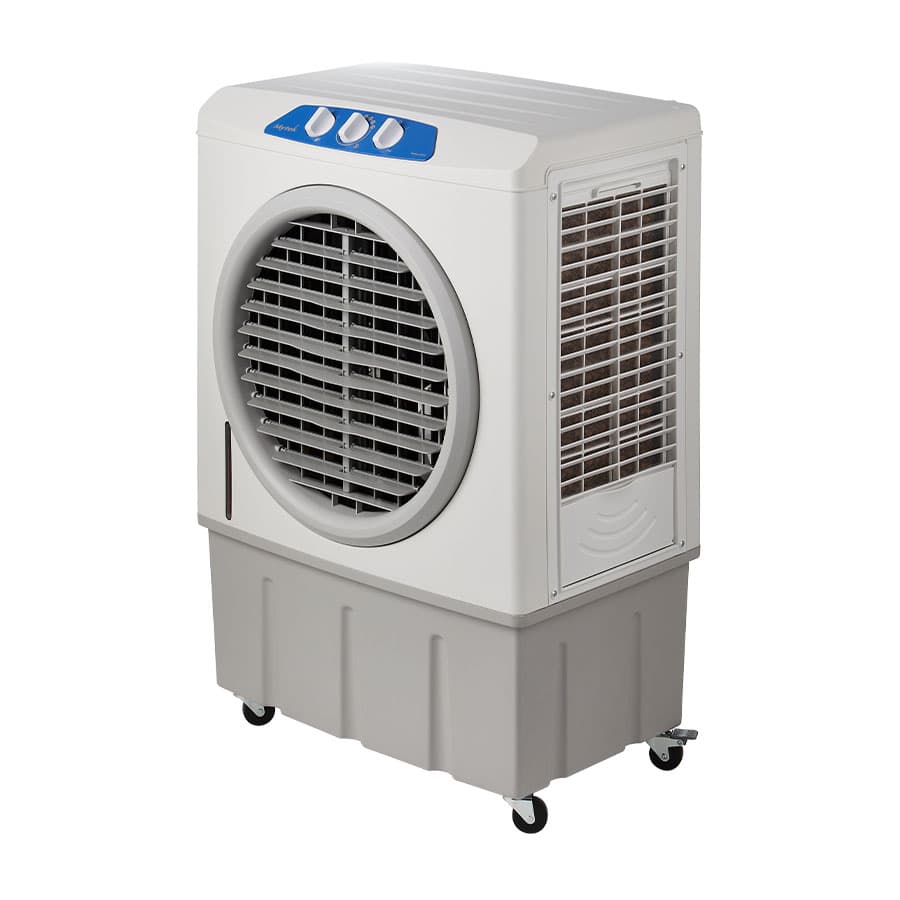
Model 3399 – 60L Portable Evaporative Air Cooler
The Mytek 3399 Portable Evaporative Air Cooler features a 60-liter water tank and side compartments that can hold frozen water bottles. Ice can also be added to the unit.
The cooling pad and filtration system work together as air moves through the cooler.
Automatic airflow adjustment allows air to be directed in four directions: left, right, up, and down.
Four caster wheels provide easy mobility, while brakes on the rear wheels help secure the cooler when needed.
Recommended Cooling Area: 66–99 m²
Airflow: 1,535 CFM
Water Capacity: 60 L
Power: 210 W
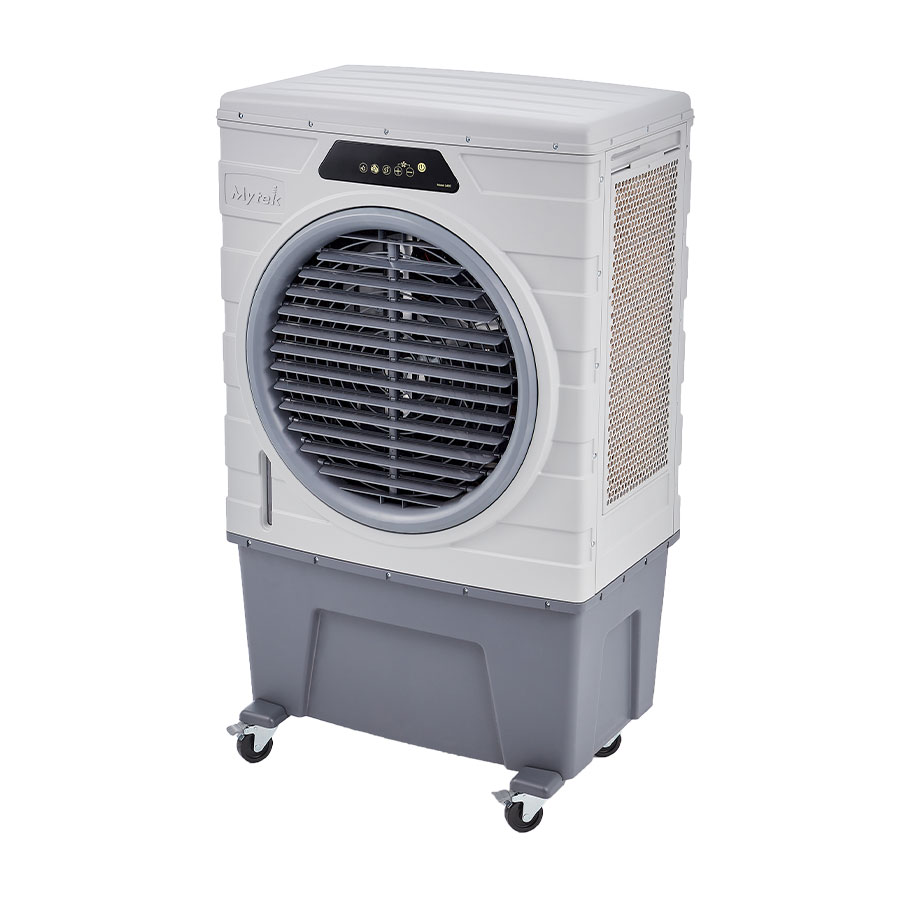
Model 3400 – 100L Portable Evaporative Air Cooler with DC Motor
The Mytek 3400 Portable Evaporative Air Cooler features a 100-liter water tank and energy-efficient DC motor.
An LED display and included remote control make the cooler easy to operate. The unit also features an ozone function designed to help deodorize the surrounding environment.
For easier filling, the 3400 supports a continuous water supply using a hose connection. Its water connection includes overflow protection to help prevent overfilling and spills.
Caster wheels make the unit easier to transport, while brakes on the front wheels help keep it securely positioned.
Recommended Cooling Area: Up to 99 m²
Airflow: 2,102 CFM
Water Capacity: 100 L
Power: 200 W
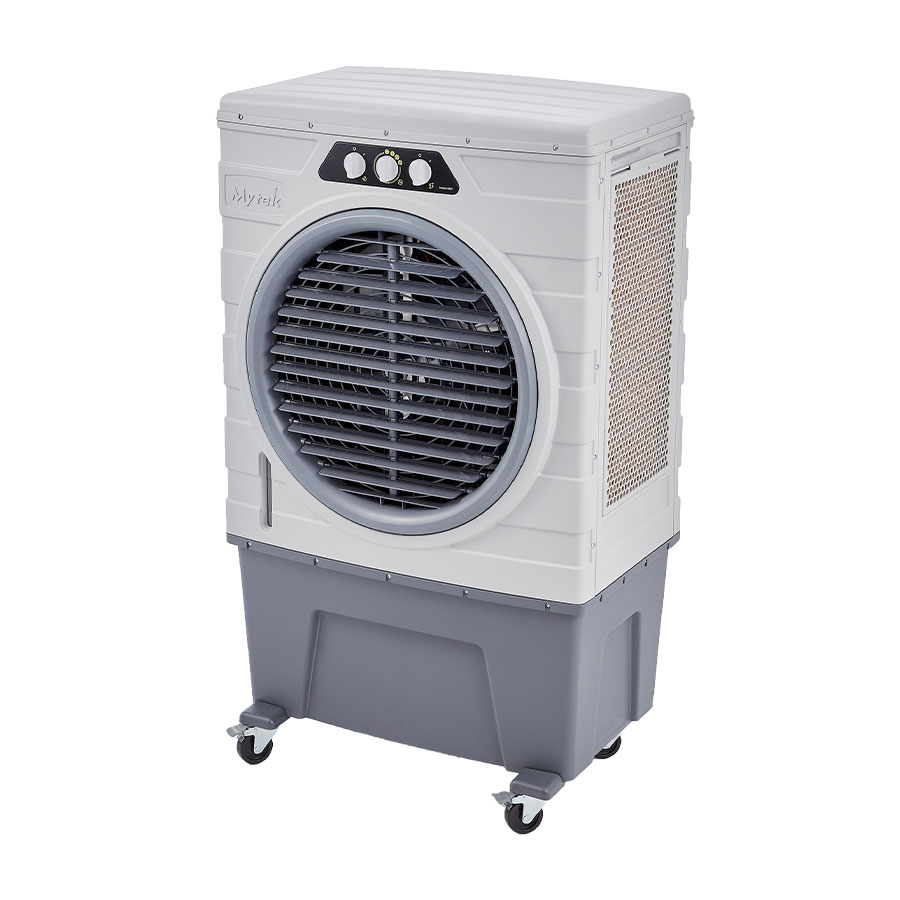
Model 3401 – 100L Industrial Evaporative Air Cooler
The Mytek 3401 Industrial Evaporative Air Cooler provides the same 100-liter water capacity and dimensions as the 3400 but features manual controls and an AC motor.
Like other Mytek evaporative coolers, the unit draws in surrounding warm air and passes it through water-saturated cooling media. Natural evaporation removes heat from the air before the fan distributes the cooler air into the surrounding area.
The 3401 is designed for larger spaces requiring greater airflow.
Recommended Cooling Area: Up to 99 m²
Airflow: 2,102 CFM
Water Capacity: 100 L
Power: 250 W
Mytek Portable Air Cooler Comparison
Swipe horizontally to compare all models.

|
MOD. 3204 | MOD. 3399 | MOD. 3400 | MOD. 3401 |
|---|---|---|---|---|
| Product |
|
|
|
|
| Airflow | 650 CFM | 1,535 CFM | 2,102 CFM | 2,102 CFM |
| Water Capacity | 45 L | 60 L | 100 L | 100 L |
| Cooling Area | 33–66 m² | 66–99 m² | Up to 99 m² | Up to 99 m² |
| Dimensions | 490 × 450 × 1060 mm | 690 × 460 × 1025 mm | 818 × 530 × 1387 mm | 818 × 530 × 1387 mm |
| Weight | 16 kg | 24 kg | 35.3 kg | 35.8 kg |
| Power | 80 W | 210 W | 200 W | 250 W |

Portable Air Cooler Care and Maintenance
To help maintain optimal performance and extend the life of your portable air cooler, follow these simple care and maintenance tips:
Clean the Cooling Pads and Water Tank Regularly
Dust, minerals, and debris can build up on the cooling pads and inside the water tank, which can affect the cooler’s performance. Clean these components regularly according to the manufacturer’s instructions.
Allow the Cooling Pads to Dry Before Turning Off the Unit
About 15 minutes before turning off the cooler, turn off the cooling function and allow the fan to continue running. This helps dry the cooling pads and keep the unit operating properly.
Store the Cooler in a Clean, Dry Place
If you don’t plan to use your portable air cooler for an extended period, completely empty the water tank and store the unit in a clean, dry location away from direct sunlight. This will help keep the cooler in good condition while it is not in use.
Adjust Cleaning Frequency Based on Local Conditions
How often you need to clean the cooling pads depends on the air and water quality in your area. Clean and empty the water tank at least once a week to help reduce mineral buildup. If you notice mineral deposits on the cooling pads, remove and gently clean them with water according to the manufacturer’s instructions.
Frequently Asked Questions About Portable Air Coolers
What is evaporative cooling and how does it work?
Evaporative cooling is a natural process in which water absorbs heat as it evaporates. In a portable air cooler, warm air passes through water-saturated cooling pads. As the water evaporates, it absorbs heat from the air, producing cooler air that is then circulated into the surrounding space.
What is the difference between an air conditioner and a portable air cooler?
The main difference is how they cool the air. Air conditioners use refrigerants and a refrigeration cycle to remove heat from indoor air, while portable evaporative air coolers use the natural process of water evaporation. Air conditioners typically require more energy and may require installation, while portable air coolers are generally easier to set up, move, and operate.
How much space can a portable air cooler cool?
Cooling capacity varies depending on the model and environmental conditions, including temperature, humidity, and ventilation. Portable air coolers are available for a variety of spaces, from smaller rooms to larger commercial and open areas. Always check the manufacturer's recommended cooling area and airflow specifications when selecting a model.
Is it safe to leave a portable air cooler running overnight?
A portable air cooler can be used for extended periods when operated according to the manufacturer's instructions. Place the unit on a stable surface, keep it away from heat sources and flammable materials, and maintain adequate ventilation to allow proper airflow.
Do portable air coolers work in humid climates?
Portable evaporative air coolers work best in hot, dry climates with lower humidity. Because evaporative cooling relies on water evaporation, its cooling effectiveness decreases as humidity increases. In more humid conditions, proper ventilation and airflow become especially important for getting the best possible performance.
How to Maximize the Efficiency of a Portable Air Cooler
To get the best performance from your portable air cooler, consider these simple tips:
Position the Air Cooler Strategically
Place the cooler near the area where you spend the most time, such as your workspace, seating area, or other frequently used space. This allows the cool airflow to reach you more directly.
Use an Additional Fan to Circulate Cool Air
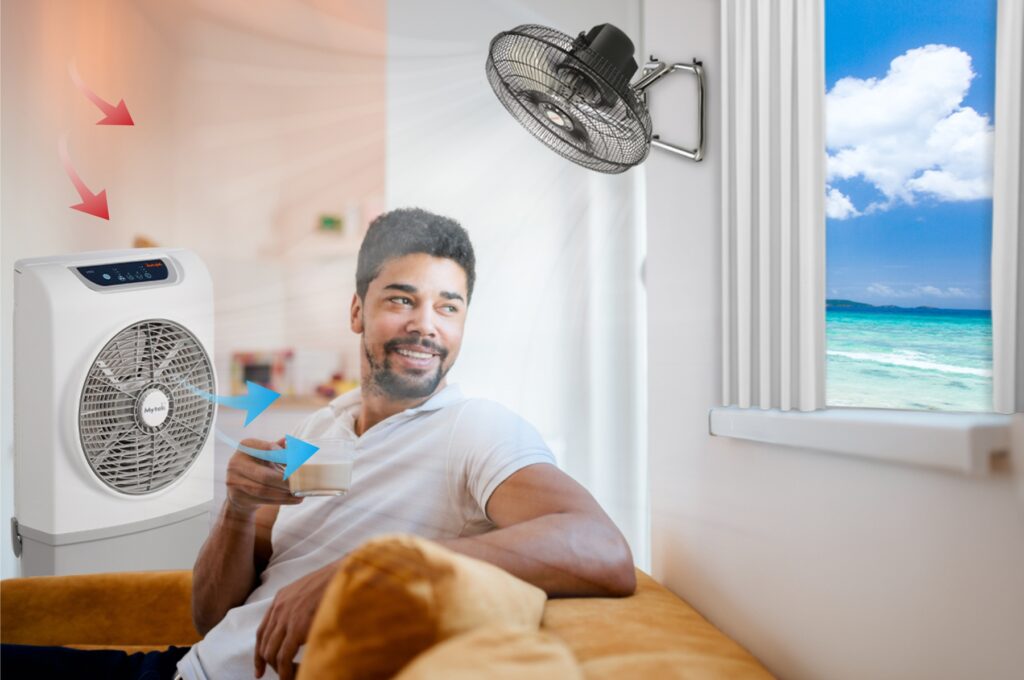
Placing a fan near the portable air cooler can help distribute the cooled air more effectively throughout the space.
Maintain Proper Ventilation
Keep windows or doors open to allow fresh air to circulate and humid air to escape. Make sure the cooler’s air intake and outlet remain unobstructed to maintain proper airflow and cooling performance.
Conclusion
Portable air coolers offer a convenient and energy-efficient way to stay cool during hot weather, especially in dry climates and open or well-ventilated spaces where traditional air conditioning may not be practical.
When choosing a portable air cooler, consider factors such as the size of your space, cooling capacity, features, energy consumption, and price to find the model that best fits your needs. Regular care and maintenance can also help maintain performance and extend the life of your cooler.
Explore Mytek’s portable air coolers and find the right cooling solution for your space.